


.png)
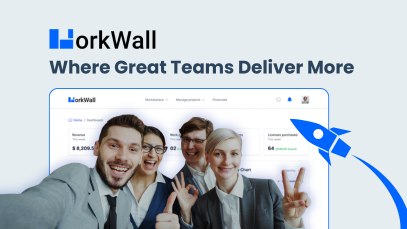
For many businesses, hiring feels like the obvious solution whenever projects fall behind. But adding more people doesn't automatically improve execution. As organizations expand across departments, vendors, technology partners, and independent professionals, work becomes increasingly fragmented. Updates live in multiple tools, approvals move through disconnected workflows, and accountability becomes difficult to track. The result is an execution gap—where talented teams are working hard, but projects still struggle to move forward efficiently. The organizations that consistently deliver complex projects understand that sustainable growth isn't driven by headcount alone. It comes from building a connected execution framework that provides visibility, establishes accountability, and enables every stakeholder to contribute toward measurable business outcomes.

For many organizations, the first response to a delayed project is simple: hire more people.
Another developer. Another project manager. Another agency. Another contractor.
It feels like the logical solution. After all, if work isn't getting done, adding more resources should increase delivery capacity. Yet months later, many businesses find themselves facing the same challenges. Deadlines continue to slip. Cross-functional teams struggle to stay aligned. Status meetings become longer, approvals move slower, and leaders still lack a clear picture of what's actually happening across projects.
The problem wasn't a shortage of talent.
It was a shortage of execution.
As organizations grow, work becomes increasingly distributed across internal teams, external vendors, independent contractors, and specialized partners. Every stakeholder relies on different communication channels, project management tools, spreadsheets, and reporting methods. Information becomes fragmented, accountability becomes unclear, and project visibility gradually disappears.
This is where even the strongest teams begin to struggle.
Highly skilled professionals spend valuable hours searching for updates instead of making progress. Managers chase status reports instead of removing blockers. Leadership makes decisions based on incomplete information because there is no single source of truth connecting people, projects, and outcomes.
The cost of this fragmentation isn't always visible on a balance sheet, but it affects every stage of execution. Delivery slows, operational overhead increases, collaboration weakens, and customers begin to feel the impact long before leadership recognizes the underlying issue.
The organizations leading today's market aren't necessarily hiring faster than everyone else. They're building systems that enable people to execute better. They understand that sustainable growth doesn't come from increasing headcount alone—it comes from creating visibility, accountability, and structured execution across every project and every team.
That's why the conversation is beginning to shift.
The real competitive advantage is no longer access to talent.
It's the ability to turn talent into predictable business outcomes.
Every growing business eventually reaches a point where work becomes too complex to manage through disconnected systems.
Projects are no longer handled by a single team. They involve employees, independent contractors, technology partners, consultants, and vendors working across different locations, time zones, and business functions. While each stakeholder may be using the right tools individually, the organization as a whole begins to lose visibility over how work is actually progressing.
A project manager updates one platform. A contractor shares progress through email. A finance team waits for approvals in another system. Leadership reviews spreadsheets that were already outdated the moment they were exported.
None of these processes seem problematic on their own.
Together, they create operational friction that slows every project.
As this fragmentation increases, businesses begin to experience challenges that are difficult to quantify but impossible to ignore. Teams spend more time coordinating work than completing it. Decision-makers struggle to identify bottlenecks before they impact delivery. Accountability becomes difficult because ownership is scattered across multiple people and platforms.
This is what separates growing organizations from scalable organizations.
Growth increases the volume of work.
Execution determines whether that work is delivered efficiently.
Without a structured execution framework, every new project introduces additional complexity. Every new vendor creates another communication channel. Every new contractor adds another reporting process. Instead of accelerating delivery, expansion gradually increases operational overhead.
The result isn't simply delayed timelines. It affects customer satisfaction, employee productivity, vendor collaboration, compliance, and ultimately the organization's ability to scale with confidence.
The businesses that consistently deliver complex projects don't eliminate complexity.
They build systems that manage it.
Because successful execution isn't about knowing where work started.
It's about knowing where every project stands, who owns the next action, what risks exist, and what needs attention—at any given moment.
Most organizations don't fail because they hire the wrong people.
They fail because there is a gap between assigning work and successfully delivering it.
This is what we call the Execution Gap.
The Execution Gap isn't created by a lack of talent. It's created when work moves across multiple people, departments, vendors, and systems without a structured way to track ownership, progress, and outcomes.
Consider a typical enterprise project.
A delivery manager assigns tasks to internal teams. A specialized contractor develops a key feature. A vendor waits for approvals before moving forward. Finance requires documentation before releasing payments, while leadership expects accurate progress reports for weekly reviews.
Each team is performing its role.
Yet the project slows down.
Not because people aren't working—but because work isn't connected.
Information is scattered across emails, messaging platforms, spreadsheets, project management tools, and approval systems. Every handoff introduces another opportunity for delays, miscommunication, or missed accountability. Managers spend valuable time chasing updates instead of solving problems, while leadership struggles to understand whether a project is genuinely on track or simply appears to be.
This is the difference between activity and execution.
Busy teams don't always create successful outcomes.
Connected teams do.
Organizations that consistently deliver complex projects understand that execution is more than task management. It requires complete visibility into who owns each deliverable, how work is progressing, where dependencies exist, and which risks need immediate attention.
When execution becomes connected, projects move with greater clarity. Decisions are made faster, collaboration improves across internal and external teams, and leaders gain confidence that business objectives are translating into measurable outcomes.
The most successful enterprises don't rely on constant follow-ups to keep projects moving.
They build execution systems where progress is visible, accountability is shared, and every stakeholder works from the same source of truth.
If fragmented execution is the problem, hiring more people isn't the solution.
Modern organizations need a way to connect every stakeholder, every deliverable, and every milestone into a single execution framework.
This is where the conversation shifts from workforce management to execution management.
WorkWall was built around a simple idea: successful projects aren't defined by the number of people involved—they're defined by how effectively those people collaborate, communicate, and deliver outcomes.
Whether your organization works with internal teams, technology partners, independent professionals, or external vendors, WorkWall provides a centralized platform where every project can be managed with greater visibility, accountability, and control.
Instead of relying on scattered communication channels and disconnected project updates, organizations gain a unified workspace where work is transparent, progress is measurable, and every stakeholder understands their role in the delivery process.
More importantly, leaders no longer have to rely on manual follow-ups to understand project health. They gain real-time visibility into ongoing initiatives, delivery milestones, resource utilization, and project risks, enabling faster decisions and more predictable outcomes.
Track projects, milestones, and deliverables through a centralized workspace that keeps everyone aligned.
Focus on measurable business outcomes rather than simply assigning tasks, ensuring every contribution supports project success.
Collaborate with internal teams, external partners, and independent professionals through a single execution platform.
Monitor project status, dependencies, and potential risks with live updates that enable proactive decision-making.
Clearly define ownership across every stage of execution, reducing delays and improving delivery confidence.
The future of work isn't just distributed.
It's connected.
Organizations that invest in execution platforms create an environment where collaboration becomes intentional, accountability becomes visible, and growth becomes sustainable.
Because delivering great work isn't about managing more people.
It's about enabling every person to deliver their best work together.
The way organizations work has fundamentally changed.
Projects are no longer delivered by a single department working from one office. Today's enterprises operate through a dynamic ecosystem of employees, technology partners, independent professionals, consulting firms, and global delivery teams. Success depends not only on having access to the right expertise but also on ensuring that every contributor works toward the same outcome.
This shift demands a new operating model.
Organizations can no longer rely on disconnected tools, manual follow-ups, or fragmented reporting to manage increasingly complex projects. As businesses grow, visibility becomes more valuable than headcount, and accountability becomes more important than activity.
The companies leading their industries understand this well. They don't measure productivity by the number of tasks completed or hours logged. They measure success by the outcomes delivered, the speed of execution, and the ability to adapt without losing control.
Execution has become a strategic capability.
It enables leaders to identify risks before they become delays, helps teams collaborate with greater clarity, and gives organizations the confidence to scale without creating operational complexity.
WorkWall was built with this vision in mind.
By bringing together talent, technology partners, project visibility, and outcome-based execution into one connected platform, WorkWall helps organizations move beyond simply managing work. It enables them to execute with greater confidence, transparency, and consistency.
Because in today's business environment, the organizations that win won't be the ones with the largest workforce.
They'll be the ones that execute better than everyone else.
Ready to Transform the Way Your Teams Deliver?
Discover how WorkWall helps organizations connect people, projects, and outcomes through a single execution platform—empowering businesses to collaborate more effectively, improve delivery visibility, and scale with confidence.
Build Better Teams. Execute Better Projects. Deliver Better Outcomes.
Explore how real-time tech like AI, IoT, and cloud connectivity is reshaping academic campuses into smarter, more secure, and connected spaces

Unlock smarter workflows and hyper-personalized journeys with Salesforce AI. Discover how automation transforms customer relationships.

Discover how AI-driven workflow automation in Workday is reshaping HR and finance operations, reducing errors, and enhancing efficiency through smart decision-making.

Unlock the secrets to faster Oracle database queries with advanced indexing techniques. Boost performance and efficiency with practical insights and best practices.

Discover how Workday’s cloud-based ERP streamlines HR and finance, driving smarter decisions and operational efficiency in modern enterprises.

Explore how AI in ServiceNow transforms service management, boosting efficiency and satisfaction....

Microsoft has announced that Skype will officially shut down on May 5, 2025, marking the end of an era for the popular video-calling and messaging service after over two decades.
.png)

Explore how AWS IoT transforms healthcare with real-time patient monitoring and data flow...........
Stay ahead of the tech curve! Subscribe to our weekly newsletter for a curated dose of the latest industry insights, project highlights, and exclusive updates.