


.png)
.png)
What once made someone valuable—being efficient, dependable, and consistently productive—is no longer the full picture. As AI accelerates execution and automates routine work, businesses are placing greater value on something deeper: impact, ownership, problem-solving, and the ability to move outcomes forward. This shift is creating pressure for some, opportunity for others, and confusion for many. In this blog, we explore how AI is redefining work—and what professionals need to understand to stay ahead.

A quiet shift is happening in workplaces around the world.
It didn’t begin with a dramatic announcement. There was no single moment when companies decided to completely change the way they operate. Instead, it started subtly. Teams began completing tasks faster. Reports that once took hours could be drafted in minutes. Research became easier. Administrative work became lighter. Communication became more streamlined.
At first, it felt like progress in the simplest form.
More speed. More efficiency. Better tools.
But then something deeper began to happen.
Even though work was getting done faster, many professionals started feeling a strange pressure. Output was increasing, yet expectations were rising even faster. Completing tasks was no longer enough. Delivering on time was no longer enough. Simply being productive stopped feeling like a competitive advantage.
That is because AI is not just speeding up work—it is redefining what valuable work actually means.
For years, success in many roles followed a familiar pattern. If you were reliable, efficient, and consistent, you were seen as a strong performer.
You were valued for:
These qualities still matter. But they are no longer enough on their own.
Why? Because technology has reduced the value of routine execution. Tasks that once required significant effort can now be completed faster through automation, AI copilots, workflow systems, and smart platforms.
That means the baseline has changed.
What used to make someone stand out is now often considered standard.
One of the biggest misconceptions about AI is that it exists only to replace people. In reality, the first major impact of AI in many organisations is not replacement—it is expectation recalibration.
When everyone has access to faster tools, quicker research, better drafts, and automated support, then speed alone becomes less valuable.
Think about it this way:
If every professional can complete a report in half the time, then the report itself is no longer the differentiator.
What matters becomes the following:
This is where many professionals feel the tension. They are still working hard—but the criteria for recognition has changed.
A common experience in modern workplaces looks like this:
You complete all assigned tasks.
You deliver on schedule.
You even exceed what was requested.
Then in the meeting, the conversation shifts to:
Suddenly, the work you delivered feels like the starting point—not the finish line.
This is not because your effort lacks value. It is because organizations increasingly reward outcomes over activity.
Being productive used to be impressive. Today, productivity is often expected.
AI tools can help schedule meetings, summarise calls, write first drafts, analyze spreadsheets, manage pipelines, and accelerate workflows. As these capabilities become common, professionals need to differentiate themselves in new ways.
That differentiation comes from human strengths that AI supports—but cannot own independently.
These include:
The ability to understand what matters most and why.
Knowing what to prioritise, what to ignore, and what decision creates the best outcome.
Generating ideas, campaigns, solutions, and approaches that are original and relevant.
Taking responsibility for results, not just assigned actions.
Turning complexity into clarity and helping others align quickly.
Responding effectively when goals, markets, or priorities shift.
These qualities are becoming career accelerators in the AI era.
Imagine two employees in the same department.
Both use AI.
Both are skilled.
Both have access to the same information.
But they work differently.
Over time, professionals create more value—not because they work harder, but because they think beyond execution.
That difference is becoming more visible in modern organisations.
This shift also explains why many companies say hiring feels more difficult, even when talent is widely available.
The challenge is no longer finding people who can do the job.
The challenge is finding people who can:
These capabilities are harder to measure in interviews and resumes. That is why hiring cycles can feel slower and more selective.
This transformation is not limited to employees. Leaders are being redefined as well.
In the past, managers often created value through oversight, process control, and decision bottlenecks. Today, those approaches can slow organizations down.
Modern leaders create value by:
Leadership is shifting from control to orchestration.
Independent professionals may feel this change even faster.
Businesses increasingly hire contractors, consultants, and freelancers not just for extra hands but for immediate outcomes. They expect talent who can step in, understand challenges quickly, and create momentum.
That means successful independent professionals are often those who can:
The demand is moving from “support” to "impact".
The good news is this shift creates enormous opportunity.
Because when routine work becomes easier, high-value work becomes more visible.
Here are practical ways professionals can grow:
Don’t just ask, “What do I need to do?”
Ask, “What result are we trying to achieve?”
Use AI to remove low-value manual work so you can focus on thinking, strategy, and execution.
Good judgment becomes more valuable when speed increases.
Translate your work into metrics, growth, savings, efficiency, or customer value.
Understand how marketing affects sales, how operations affect finance, how technology affects customer experience.
People who move things forward without waiting become indispensable.
It is important to acknowledge something many professionals feel but rarely say: uncertainty.
When standards rise quickly, people can feel like they are doing more but receiving less recognition. That feeling is real.
But it often signals transition—not failure.
The workplace is evolving. Roles are being redefined. Expectations are changing.
This is uncomfortable, but it also creates openings for those willing to evolve with it.
The future is not humans versus AI.
It is humans who know how to combine judgement, creativity, empathy, leadership, and ownership—with AI-powered speed and intelligence.
Organisations that understand this will outperform competitors.
Professionals who understand this will accelerate their careers.
The winners of the next era will not simply be those who know the most or work the longest hours. They will be those who can:
AI is not reducing human importance. It is changing where human value lives.
Routine execution matters less. Strategic contribution matters more.
Speed matters less on its own. Impact matters more.
Following instructions matters less. Ownership matters more.
The question for professionals today is no longer
“Can you get the work done?”
It is:
“Can you make the work matter?”
That is how AI is truly redefining work—and those who embrace this shift will lead the future.
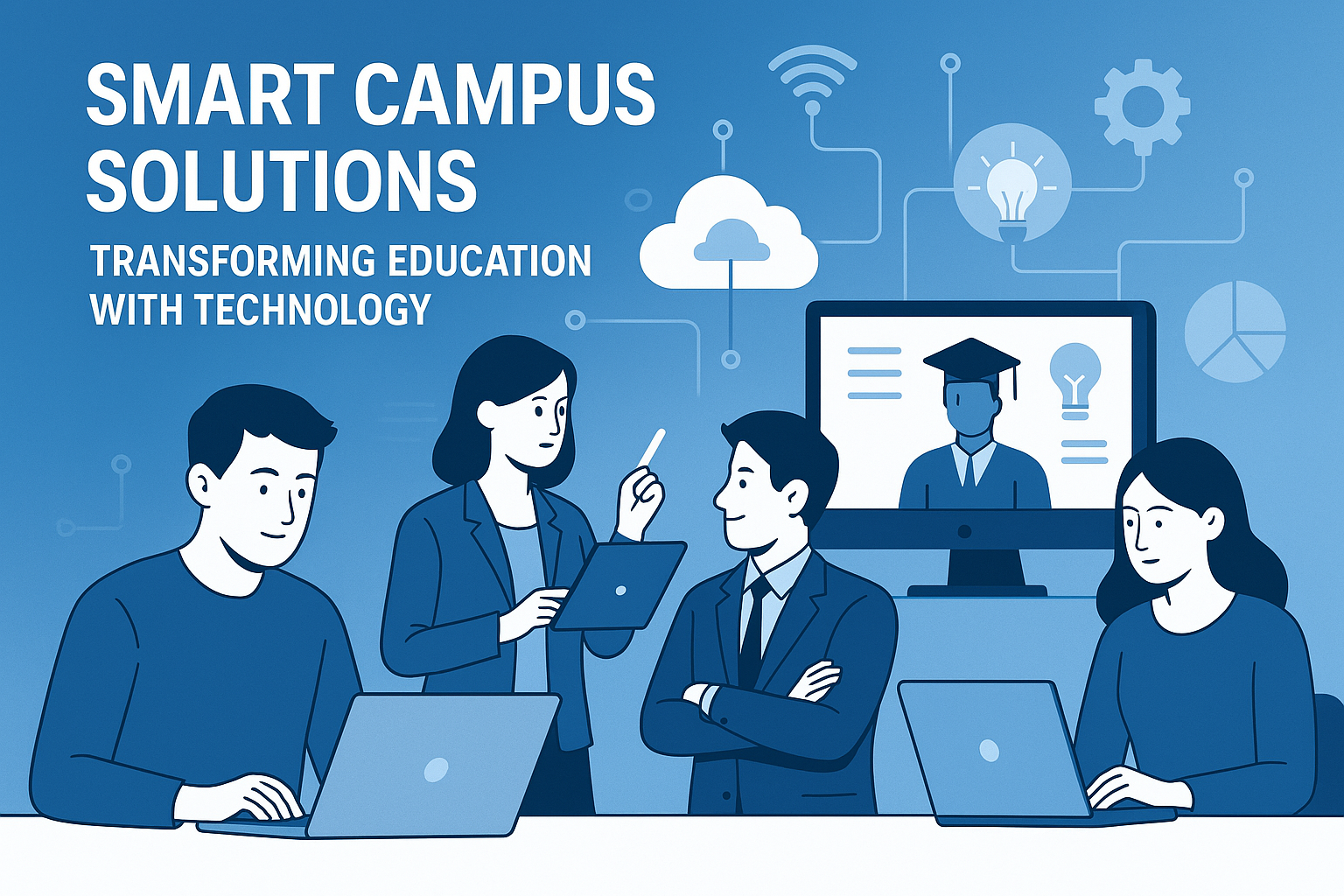
Explore how real-time tech like AI, IoT, and cloud connectivity is reshaping academic campuses into smarter, more secure, and connected spaces

Unlock smarter workflows and hyper-personalized journeys with Salesforce AI. Discover how automation transforms customer relationships.

Discover how AI-driven workflow automation in Workday is reshaping HR and finance operations, reducing errors, and enhancing efficiency through smart decision-making.

Unlock the secrets to faster Oracle database queries with advanced indexing techniques. Boost performance and efficiency with practical insights and best practices.

Discover how Workday’s cloud-based ERP streamlines HR and finance, driving smarter decisions and operational efficiency in modern enterprises.

Explore how AI in ServiceNow transforms service management, boosting efficiency and satisfaction....

Microsoft has announced that Skype will officially shut down on May 5, 2025, marking the end of an era for the popular video-calling and messaging service after over two decades.
.png)

Explore how AWS IoT transforms healthcare with real-time patient monitoring and data flow...........
Stay ahead of the tech curve! Subscribe to our weekly newsletter for a curated dose of the latest industry insights, project highlights, and exclusive updates.