


.png)
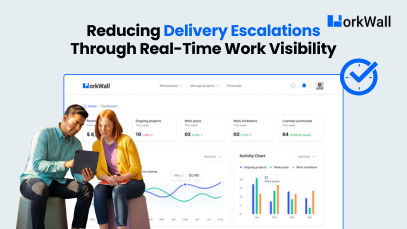
When a delivery escalation reaches executive leadership, it often feels sudden—a missed milestone, an unhappy customer, or a project that's unexpectedly off track. In reality, these issues rarely appear overnight. They typically begin as small, manageable challenges such as unresolved dependencies, delayed approvals, communication gaps, or resource constraints. Without continuous visibility into project execution, these early warning signs remain hidden until they grow into larger delivery risks. By the time leadership is informed, teams are no longer preventing problems—they're responding to them. Reducing delivery escalations starts with identifying these signals early, enabling proactive action before they impact timelines, budgets, and stakeholder confidence.

The weekly project review begins with a reassuring update: every milestone is on track, timelines appear stable, and risks seem under control. Yet, just days later, an urgent email lands in the CIO's inbox. A critical customer deliverable has been delayed, stakeholders are demanding answers, and what was once considered a healthy project has suddenly become an executive escalation.
The surprising part? The problem didn't emerge overnight.
It had been quietly building for weeks—hidden behind disconnected systems, fragmented communication, delayed status updates, and a lack of visibility into how work was actually progressing across teams. By the time leadership became aware of the issue, the opportunity to prevent it had already passed.
This is the reality for many enterprise organizations today. As projects become more complex, teams more distributed, and business expectations higher than ever, traditional methods of tracking delivery are struggling to keep pace. Weekly reports, static dashboards, and periodic status meetings provide snapshots of activity, but they rarely reveal the operational signals that indicate a project is beginning to drift off course.
The result is a cycle of reactive management. Leaders spend valuable time responding to delivery escalations instead of preventing them, project teams are forced into last-minute firefighting, and customer confidence suffers when commitments cannot be met.
The organizations leading today's digital economy are approaching project execution differently. Rather than relying on retrospective reporting, they are investing in real-time work visibility—the ability to continuously monitor progress, identify risks as they emerge, and make informed decisions before small issues evolve into business-critical problems.
In this article, we'll explore why delivery escalations are often symptoms of deeper visibility gaps, how real-time work visibility enables more predictable execution, and what organizations can do to move from reactive project management to proactive delivery excellence.
When a delivery escalation reaches executive leadership, it often feels sudden. A project that appeared healthy during the last review is now behind schedule, a customer commitment is at risk, or a critical dependency has unexpectedly stalled progress.
In reality, these situations rarely develop overnight.
Most delivery escalations begin as small, manageable issues—an unresolved dependency, a delayed approval, an overloaded resource, or a communication gap between teams. Individually, these challenges may seem insignificant. However, when they remain unnoticed or unaddressed, they gradually compound until they become impossible to ignore.
This delayed visibility creates one of the biggest challenges in enterprise project delivery. By the time leadership is informed, teams are no longer focused on preventing the issue—they are already managing its consequences. Project plans are revised, priorities shift unexpectedly, additional meetings are scheduled, and valuable time is spent explaining what went wrong instead of keeping execution on track.
Several factors contribute to this pattern:
Project updates are often scattered across emails, chat platforms, spreadsheets, ticketing systems, and departmental tools. While each system provides part of the picture, none offers a complete view of execution. As information becomes fragmented, identifying emerging risks becomes increasingly difficult.
Traditional reporting mechanisms rely on scheduled updates—weekly meetings, milestone reviews, or monthly dashboards. These snapshots provide historical information but rarely capture what is happening in real time. Between reporting cycles, small issues can grow into significant delivery risks without attracting attention.
Modern projects involve multiple business functions working simultaneously. Development teams, operations, finance, procurement, security, compliance, and business stakeholders often depend on one another to maintain momentum. A delay in one function can quietly affect several others, even when individual teams believe they are progressing as planned.
Many organizations track completed tasks exceptionally well but struggle to monitor indicators that reveal future delivery problems. Early warning signs—such as increasing workload, recurring blockers, delayed approvals, or unresolved dependencies—often remain hidden until they begin affecting deadlines.
The result is a reactive delivery model. Leadership becomes aware of problems only after project health has already deteriorated, leaving fewer options to recover timelines without increasing costs, extending schedules, or compromising quality.
The most effective organizations recognize that preventing delivery escalations isn't about responding faster once problems are reported. It's about identifying operational signals early enough to intervene before those problems escalate.
That shift begins with one critical capability: continuous visibility into how work is progressing—not just what work has been completed.
Most enterprises have invested significantly in project management tools, collaboration platforms, and reporting processes. Project plans are documented, tasks are assigned, milestones are defined, and dashboards are regularly reviewed.
Yet delivery escalations continue to occur.
The reason isn't a lack of technology—it's a lack of context.
Traditional project tracking systems are designed to answer questions like:
These are important operational metrics, but they don't always reveal whether a project is genuinely healthy.
A project can appear 90% complete while still carrying significant delivery risks. Critical dependencies may remain unresolved, approvals may be delayed, key contributors may be overloaded, or multiple workstreams may be drifting out of alignment. None of these issues are immediately obvious when leaders are looking only at task completion or milestone reports.
This creates a false sense of confidence.
By the time risks become visible through missed deadlines or stakeholder concerns, project teams are no longer preventing problems—they are responding to them.
One of the most common misconceptions in enterprise project delivery is equating activity with progress.
Completing tasks does not always mean the project is advancing toward its intended outcome. Teams may be highly productive within their individual functions while the overall delivery effort continues to lose momentum because of hidden blockers, competing priorities, or disconnected dependencies.
Execution is dynamic. It changes daily as priorities shift, resources are reallocated, decisions are delayed, and new risks emerge. Static reports and scheduled reviews often fail to capture these real-time changes.
This is why organizations need to move beyond measuring what has happened and begin understanding what is happening now.
Forward-thinking organizations are redefining how they monitor delivery.
Instead of relying solely on project status reports, they are focusing on execution visibility—a continuous understanding of how work is progressing across teams, where bottlenecks are forming, which dependencies are at risk, and how emerging issues could impact business outcomes.
Execution visibility doesn't replace project management; it enhances it.
It enables leaders to identify patterns before they become problems, align teams around shared priorities, and make proactive decisions based on current operational realities rather than historical updates.
Ultimately, the goal is not to produce more reports—it's to create greater confidence in execution.
Project tracking tells you what has been completed. Execution visibility tells you whether you're still on the path to successful delivery.
That distinction is what separates organizations that react to escalations from those that prevent them.
Real-time work visibility isn't about displaying more dashboards or generating more reports. It's about creating a living, connected view of execution that reflects what's happening across the organization at any given moment.
Instead of waiting for weekly reviews to uncover issues, teams gain continuous insight into project health as work progresses. Leaders no longer have to ask, "What went wrong?"—they can see emerging risks early enough to ask, "What should we do next?"
This shift transforms project delivery from a reactive process into a proactive operating model.
Projects don't fail because a single task is delayed.
They fail because small disruptions ripple through interconnected workstreams without being recognized in time.
Real-time work visibility brings these hidden relationships into focus by showing not just individual activities, but how people, dependencies, timelines, and priorities influence one another.
Instead of isolated updates, organizations gain a unified view of execution—one that helps everyone understand not only what is happening, but why it's happening.
Every project generates signals long before an escalation occurs.
A delayed approval, an unresolved dependency, a resource working beyond capacity, or repeated shifts in priorities may seem manageable on their own. But together, they can quietly alter the trajectory of an entire project.
Organizations with real-time visibility don't wait for deadlines to be missed before taking action.
They continuously monitor these operational signals, allowing teams to resolve issues while they are still small, manageable, and far less costly.
The result is fewer surprises, faster decision-making, and greater confidence in delivery.
Enterprise projects rarely involve a single department.
Technology, operations, finance, compliance, procurement, customer success, and business teams all contribute to successful execution. Yet each group often works within its own systems, priorities, and reporting structures.
Real-time work visibility creates a shared operational view across these functions.
When every stakeholder works from the same information, conversations become more productive. Instead of debating whose data is correct, teams focus on resolving risks, removing blockers, and maintaining momentum.
This shared visibility also strengthens accountability because everyone understands how their work contributes to broader business outcomes.
One of the greatest advantages of real-time work visibility is decision quality.
Executives don't need more information—they need timely, relevant insights that support confident action.
When leaders can instantly understand project health, identify emerging risks, and evaluate potential impacts, decisions become faster and more effective.
Whether reallocating resources, adjusting priorities, or resolving cross-functional bottlenecks, organizations can respond with clarity rather than urgency.
This ability to act before problems escalate is what separates resilient organizations from reactive ones.
Organizations that embrace real-time work visibility often share several common capabilities:
Together, these capabilities create an environment where delivery becomes more predictable, collaboration becomes more effective, and escalations become significantly less frequent.
Consider the example of a global manufacturing enterprise managing dozens of strategic initiatives across product development, supply chain operations, procurement, finance, and customer delivery.
On paper, project governance appeared well established. Every team maintained detailed project plans, weekly review meetings were conducted consistently, and leadership received regular status reports. Most projects were reported as progressing according to schedule.
However, executive escalations became increasingly common.
Customer commitments were frequently pushed back, cross-functional dependencies were discovered too late, and leadership teams found themselves spending more time resolving delivery issues than planning future initiatives. While individual teams were working hard, the organization lacked a connected view of execution across departments.
A closer assessment revealed that the problem wasn't project management—it was fragmented visibility.
Project information existed across multiple systems. Development teams tracked work in one platform, operations relied on spreadsheets, finance monitored budgets separately, while leadership depended on periodic presentations that often reflected outdated information. Every department had visibility into its own responsibilities, but no one had a complete understanding of how changes in one area affected the rest of the organization.
As a result, delivery risks remained hidden until they reached executive review meetings.
A delayed approval in procurement affected implementation timelines. Resource constraints in one business unit slowed dependent workstreams elsewhere. Small operational issues accumulated quietly until they became high-priority escalations requiring immediate executive intervention.
Recognizing that adding more meetings or reports would not solve the problem, the organization adopted a different approach. Instead of focusing solely on tracking project activities, it prioritized creating real-time visibility into execution.
Teams began working from a shared operational view that connected project progress, dependencies, ownership, risks, and delivery milestones. Rather than waiting for weekly updates, managers could identify emerging issues as work evolved. Leaders gained a clearer understanding of project health, enabling faster decisions and more effective collaboration across departments.
The impact extended far beyond project reporting.
Cross-functional discussions became more focused because everyone worked from the same information. Potential bottlenecks were identified earlier, reducing the need for reactive interventions. Teams spent less time preparing status updates and more time resolving issues that influenced delivery outcomes.
Most importantly, executive escalations became less frequent—not because projects became simpler, but because operational risks were identified and addressed before they reached a critical stage.
The organization moved from a culture of reacting to delivery problems to one of anticipating them, building greater confidence among project teams, stakeholders, and executive leadership alike.
Reducing delivery escalations isn't about adding another layer of project management. It's about giving teams and leaders the visibility they need to make timely, informed decisions before risks begin affecting delivery.
This is where WorkWall plays a transformative role.
WorkWall is designed to provide organizations with a unified view of project execution, bringing together work, people, timelines, dependencies, and delivery insights into a single platform. Instead of relying on fragmented updates from multiple tools, teams gain continuous visibility into how projects are progressing and where attention is needed most.
By connecting execution data across teams, WorkWall helps organizations move beyond simply tracking work to actively managing delivery outcomes.
Modern enterprises need more than task lists and milestone reports. They need a platform that helps them understand the complete picture of execution.
With WorkWall, project managers, delivery leaders, and executives can:
Rather than reacting to missed deadlines or unexpected escalations, organizations can proactively address issues while they are still manageable.
Enterprise delivery is rarely confined to a single department.
A successful project may involve engineering, operations, finance, procurement, compliance, customer success, and leadership—all working toward the same business objective.
WorkWall creates a connected workspace where these teams can collaborate with greater transparency. Everyone works from the same source of truth, reducing communication gaps, minimizing duplicated effort, and ensuring that decisions are based on current project realities rather than outdated reports.
This shared visibility helps teams stay aligned, even as priorities evolve and projects grow in complexity.
The value of real-time work visibility extends beyond project management.
When organizations have a clearer understanding of execution, they are better positioned to:
These outcomes don't come from increasing oversight—they come from enabling smarter execution.
WorkWall supports this shift by helping organizations replace reactive management with continuous operational visibility, allowing leaders to focus on strategic decisions instead of constant firefighting.
As organizations manage increasingly complex portfolios, traditional project management alone is no longer enough.
Leaders are expected to deliver faster, coordinate across distributed teams, adapt to changing priorities, and maintain visibility into execution—all without adding unnecessary operational overhead.
This is why many enterprises are shifting from project management to project intelligence.
Project intelligence combines real-time visibility, collaboration, and actionable insights to help organizations anticipate challenges rather than simply respond to them. It empowers leaders to understand not just what is happening, but why it is happening and what actions should be taken next.
WorkWall is built around this philosophy, enabling organizations to transform project delivery into a more connected, transparent, and resilient process.
Delivery escalations are rarely caused by a single missed deadline or isolated mistake. More often, they are the result of small issues that remain hidden until they begin affecting business outcomes.
The organizations that consistently deliver successful projects aren't necessarily those with the most meetings, the most reports, or the most project management tools. They are the ones that have continuous visibility into execution, enabling them to identify risks early, align teams effectively, and make confident decisions before challenges become crises.
As enterprise projects continue to grow in scale and complexity, real-time work visibility is no longer a competitive advantage—it's becoming an operational necessity.
With WorkWall, organizations gain the transparency needed to reduce delivery escalations, strengthen collaboration, and build a more predictable, resilient approach to project execution.
If your organization is spending more time responding to delivery escalations than preventing them, it may be time to rethink how work is managed.
WorkWall helps enterprises move beyond traditional project tracking by providing real-time work visibility, connected collaboration, and actionable execution insights—all in one platform.
Connect with our team to discover how WorkWall can help you reduce delivery risks, improve operational visibility, and deliver projects with greater confidence.


Discover how Workday connects your data dots, helping you make faster, smarter decisions—without the spreadsheet chaos.

Say goodbye to outdated forecasts. Workday helps you embrace continuous planning to keep your finance team fast, flexible, and future-ready.
Transform your workplace vibe. See how Workday creates meaningful employee experiences that keep your top talent loyal and thriving.

Discover how Workday's automation capabilities enhance operational efficiency by reducing manual tasks and improving accuracy across workflows.

Discover how CIOs can lead the charge in digital transformation by utilizing Workday’s cloud-based solutions to enhance agility, innovation, and data-driven decision-making.

Learn how Workday helps organizations remain agile, adapting to changing business environments with real-time solutions and flexible processes

Explore how Workday’s contract intelligence tools are transforming contract management through AI, automation, and improved collaboration..

Explore how Workday’s learning and development solutions help organizations build a future-ready workforce by promoting continuous learning, upskilling, and talent development.
Stay ahead of the tech curve! Subscribe to our weekly newsletter for a curated dose of the latest industry insights, project highlights, and exclusive updates.